
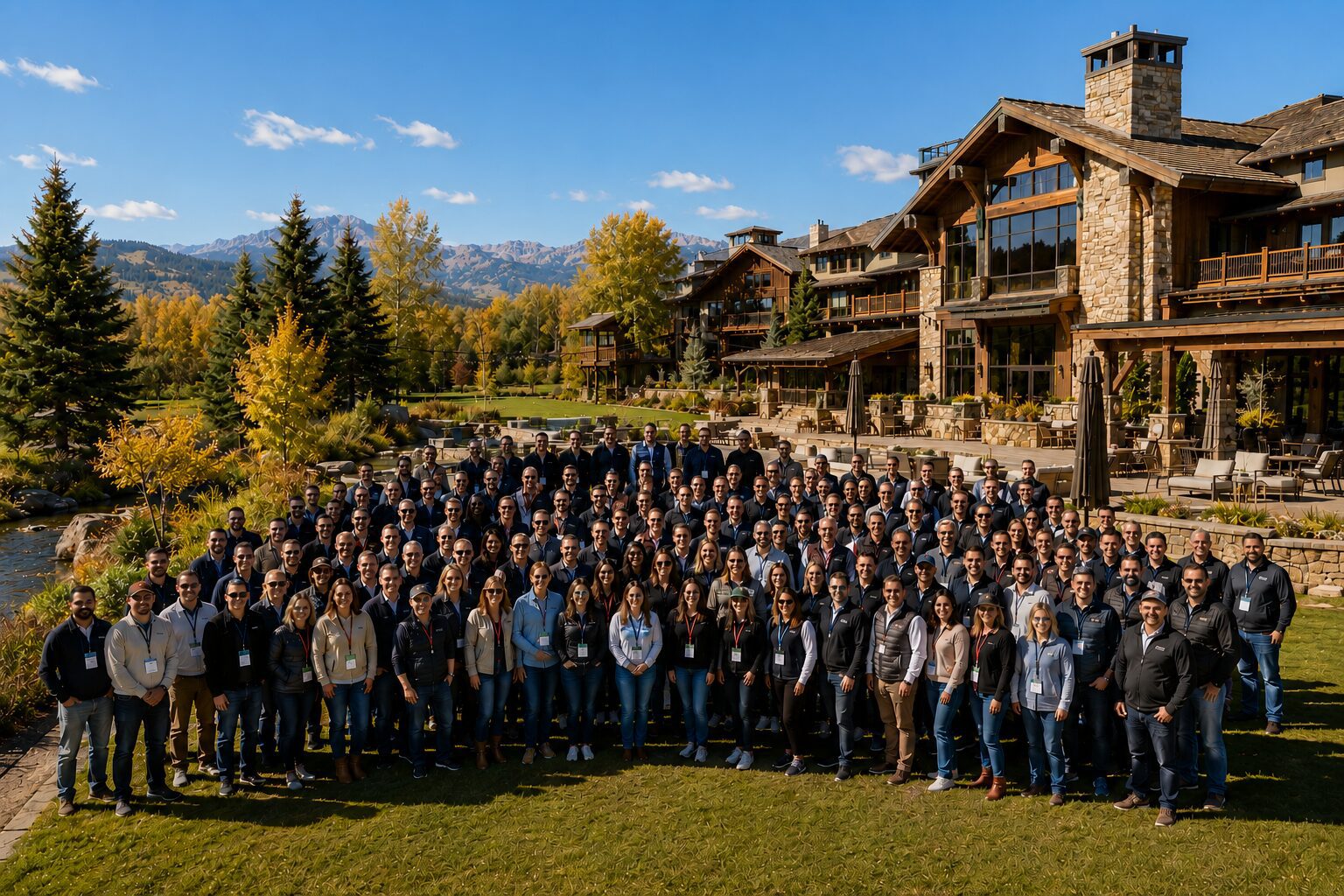
As a MICE planner specializing in corporate retreats, executive offsites, meetings, and incentive travel, my job isn’t simply to find beautiful places for people to travel. I evaluate destinations, properties, transportation, local partners, and experiences through the lens of the people who will actually be using them. Planning better corporate retreats and offsite programs means understanding not only where a team can go, but why a destination makes sense, how the experience will support the company’s objectives, and who I can trust on the ground to help execute it successfully. That’s exactly why I traveled to Mexico City as a Hosted Buyer for IBTM Americas 2026.
IBTM Americas brings together professionals from across the meetings and incentive travel industry, including hotels and resorts, destination management companies (DMCs), tourism boards, transportation providers, cruise partners, venues, and other specialized suppliers. As a Hosted Buyer, I had the opportunity to meet directly with these partners and evaluate where their destinations and services could fit within the experiences I create for my clients.
Learn more about IBTM Americas
But I didn’t go to Mexico City to collect brochures and business cards.
I went to strengthen the network behind Offsite Destinations.
And those conversations reinforced several things I believe companies should consider when planning their next retreat, executive offsite, or incentive experience.
The Destination Should Serve the Objective
A corporate retreat shouldn’t begin with:
“Where does everybody want to go?”
It should begin with:
“What does this company need this experience to accomplish?”
A leadership team working through strategy may need privacy, strong meeting facilities, and an environment that encourages focused conversation.
A company celebrating exceptional performance through an incentive trip may need something entirely different: memorable experiences, elevated service, and opportunities employees wouldn’t ordinarily create for themselves.
A team experiencing burnout may benefit from an environment that intentionally slows the pace and incorporates wellness.
The destination should support that objective.
That’s one of the reasons I don’t believe every corporate retreat needs to happen in the destinations everyone already knows.
At IBTM, some of my most interesting conversations were with partners throughout Mexico and the Baja Peninsula. Those discussions introduced possibilities ranging from wine-country experiences and wellness programming to coastal retreats, private experiences, and incentive programs.
The question isn’t:
“What’s the most popular destination?”
It’s:
“What’s the right destination for this particular group?”
That distinction is fundamental to planning better corporate retreats.
A Beautiful Resort Isn’t a Strategy
Beautiful hotels are everywhere.
And yes, the property matters.
But choosing a resort because the rooms photograph beautifully or the rooftop has an incredible view isn’t enough.
A corporate retreat can involve airport transfers, room blocks, meeting space, audiovisual requirements, food and beverage, dietary accommodations, private dinners, executive schedules, activities, local transportation, VIP movements, contingency plans, and dozens of other details.
Those elements have to work together.
When I’m evaluating a property or destination for Offsite Destinations, I’m thinking beyond what guests will see when they arrive.
I’m thinking about what happens before they arrive, while they’re there, and when they leave.
Can the destination reasonably accommodate the group’s travel patterns?
Does the property have the right meeting environment?
Can executives move between activities efficiently?
What happens if the itinerary changes?
Does the destination offer experiences appropriate for this particular company?
Who is my contact when something needs to be solved locally?
Those questions aren’t nearly as glamorous as an infinity-pool photograph.
They’re also the questions that can determine whether an offsite actually works.
Your DMC Can Make or Break the Experience
One of my biggest takeaways from IBTM was the value of having strong relationships with destination management companies.
A great DMC isn’t simply someone who books an excursion.
They’re your local intelligence.
They understand transportation realities, venues, regional vendors, cultural considerations, unusual experiences, timing, geography, and the little logistical details that aren’t obvious when you’re planning from another city—or another country.
That became especially clear during my conversations with DMC partners throughout Mexico.
Instead of asking only, “What activities do you offer?” we were able to discuss what their destinations could become for different kinds of groups.
What could an executive retreat look like here?
What could we create for an incentive group?
Where could we take a team that wants privacy?
What experiences could we build that aren’t simply the same itinerary every other group receives?
Those conversations are where destination planning gets interesting.
Because my client doesn’t need a list of things tourists can do.
They need an experience designed around their people.
Relationships Create Better Options
This may have been the most important reminder I brought home from IBTM:
Hospitality is a relationship business.
There is a significant difference between sending an inquiry to a general sales inbox and being able to contact someone you’ve actually met.
Industry events allow me to sit across the table from hotel representatives, DMCs, tourism boards, transportation companies, cruise partners, and other suppliers and have conversations that go beyond rates and availability.
I can ask what types of groups work particularly well for them.
I can learn where their destination shines—and where it doesn’t.
I can ask what planners routinely misunderstand.
I can explore what we might create together that isn’t sitting inside a standard brochure.
And they get to understand my business, my clients, and the types of experiences I’m looking to build.
Those relationships don’t guarantee that a particular supplier will be right for every client.
Actually, that’s the point.
My job isn’t to accumulate suppliers. It’s to know which partners make sense for which clients.
Incentive Travel Should Actually Feel Like a Reward
Corporate retreats and incentive travel sometimes overlap, but their objectives aren’t necessarily the same.
An incentive experience is a reward.
It should feel like one.
If employees have performed at an exceptional level, the experience shouldn’t feel like another company meeting that happens to be somewhere warm.
That doesn’t mean throwing money at extravagance for the sake of extravagance.
It means being intentional.
Private experiences, distinctive properties, culinary programming, wellness, cultural immersion, yachts and cruises, and elevated transportation can all play a role.
But the real question is:
Would this feel special to the people who earned it?
That’s where strong destination and supplier relationships become particularly valuable.
The best incentive experiences often aren’t created by selecting something from a predetermined package.
They’re created through conversations between the planner and destination partners who understand what’s possible.
Sometimes the Better Destination Is the Less Obvious One
IBTM also reinforced my desire to continue looking beyond the destinations that dominate corporate and social travel.
Mexico is a perfect example.
Cancún and the Riviera Maya are enormously recognizable, but Mexico offers significantly more diversity than those familiar resort corridors.
My conversations about Baja particularly caught my attention because of the range of experiences available within the peninsula.
Wine country.
Coastal environments.
Wellness.
Adventure.
Culinary experiences.
Distinctive properties.
And proximity to the southwestern United States creates interesting possibilities for certain groups as well.
Companies beginning their own destination research can explore the region through the official tourism resources from Baja California Tourism.
For me, though, discovering a destination is only the beginning.
The next step is understanding which clients it actually fits.
Site Inspections Are Part of the Work
Pictures can tell me what a hotel looks like.
A presentation can explain its amenities.
A website can give me square footage and room counts.
None of those can completely tell me what it feels like to move a group through that property.
That’s why site inspections and familiarization trips (commonly called FAM trips) are an important part of my work.
They allow me to experience destinations from a planner’s perspective.
I’m looking at things differently than someone arriving solely for vacation.
How far is the property from the airport?
What does arrival actually feel like?
Where could we hold a private dinner?
How far are the guest rooms from the meeting space?
What does transportation look like when twenty, forty, or sixty people need to move together?
Where are the friction points?
What experience would I build here?
And perhaps most importantly:
Which of my clients would I bring here?
Several of my conversations at IBTM resulted in opportunities to experience properties and destinations firsthand through future FAM trips and site visits.
That’s exciting personally, of course.
But professionally, it’s research.
The more I experience firsthand, the more informed my recommendations become.
Planning Happens Before You Hire Me
This is something clients don’t always get to see.
When you hire a corporate retreat planner, the work behind your retreat didn’t necessarily begin the day you submitted an inquiry.
My work began much earlier.
It happened when I sat across from a DMC in Mexico City and learned what their destination could offer.
It happens when I tour a hotel and identify which types of groups would thrive there.
It happens when I inspect meeting spaces.
It happens when I build relationships with transportation partners.
It happens when I experience a destination firsthand.
It happens when I learn that a particular property isn’t right for the type of group I serve.
And it happens when I continue building a network that allows me to make a phone call instead of starting every client project with a search engine.
That is part of planning better corporate retreats.
By the time we’re discussing your company’s retreat, I’m not simply asking:
“What hotels are available?”
I’m asking:
“What combination of destination, property, partners, and experiences will best accomplish what this company needs?”
That’s a very different planning process.
Think Beyond the Meeting Room
A corporate retreat is an investment.
You’re taking employees away from their normal responsibilities, paying for travel and accommodations, and asking them to give their time and attention to something the organization believes matters.
The experience should justify that investment.
At Offsite Destinations, I plan corporate retreats, executive offsites, leadership experiences, and incentive travel with the entire journey in mind—from destination and venue sourcing through the experiences that bring people together once they arrive.
You don’t need to know which hotel to choose.
You don’t even need to know exactly where you want to go.
That’s what the planning process is for.
If your company is considering a retreat, executive offsite, or incentive experience, don’t start by opening twenty hotel tabs.
Start with the reason you’re bringing everyone together.
Then let us build the destination around it.
Start planning with Offsite Destinations
Think beyond the meeting room. Let’s create an offsite your team will actually remember.

View comments
+ Leave a comment