
As a MICE planner, I spend a lot of time thinking about what companies actually need when they take employees away from the office. Sometimes the answer is strategy. Sometimes it’s celebration, team building, or incentive travel. Increasingly, however, companies are recognizing another need: space to genuinely disconnect, reset, and reconnect with one another. That’s why wellness corporate retreats deserve a much bigger place in the conversation.
During IBTM Americas in Mexico City, I met with a representative from Rancho La Puerta, a wellness resort in Tecate, Baja California. I already knew the property was wellness focused, but our conversation made me think more deeply about what happens when wellness isn’t simply one activity on a corporate retreat itinerary.
What happens when wellness becomes the framework for the retreat itself?
That’s a very different experience.
Wellness Should Be More Than Morning Yoga
Let’s start here.
Adding a yoga class at 7:00 a.m. doesn’t automatically make something a wellness retreat.
Neither does offering spa appointments between meetings.
Those things can certainly be part of the experience. However, a true wellness focused corporate retreat asks a much bigger question:
What would happen if we intentionally changed the environment in which this team connects?
That might mean fewer screens.
More movement.
Time outdoors.
Better food.
Space for reflection.
Less rushing from one scheduled activity to another.
Opportunities for employees to connect as people rather than titles on an organizational chart.
Most importantly, it can mean giving a team permission to slow down.
That concept is what caught my attention when I learned more about Rancho La Puerta.
A Different Kind of Corporate Environment
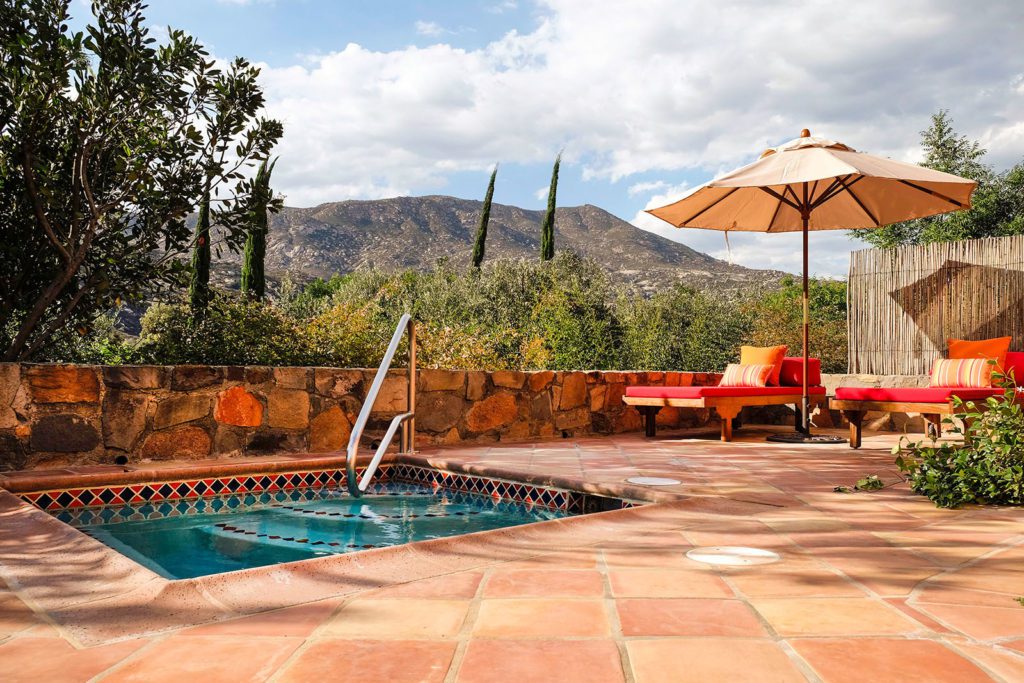
Rancho La Puerta describes itself as the original destination wellness resort. Located in Tecate, Baja California, the property sits on 4,000 acres at the foot of Mount Kuchumaa. Those grounds include 40 miles of hiking trails, 32 acres of landscaped gardens, an organic farm and cooking school, fitness facilities, pools, holistic spas, and indoor and outdoor gathering spaces.
Already, that’s a dramatically different setting from a traditional conference hotel.
But what interests me isn’t simply the acreage.
It’s what the environment makes possible.
Instead of moving between a ballroom, breakout room, elevator, and guest room, a team can spend part of its day walking trails, sharing meals, participating in wellness programming, gathering outdoors, or simply having enough physical space to think.
For the right organization, changing the environment that dramatically can change the conversation too.
What Happens When We Disconnect?
This was one of the details that really got my attention during my IBTM meeting.
Rancho La Puerta intentionally limits where guests use technology. The property provides WiFi in designated areas, and its policies restrict electronic device use in certain public spaces to help preserve the tranquil environment.
Think about what that means for a corporate group.
We spend an extraordinary amount of our working lives connected.
Email.
Slack.
Teams.
Text messages.
Notifications.
Video calls.
Calendars.
More notifications.
Even corporate retreats can become an extension of the office if employees spend every break answering emails and checking what happened while they were in the meeting.
So, what happens when the environment itself encourages people to put the screen down?
Initially, some people may hate it.
Let’s be realistic. 😂
But eventually, something else has room to happen.
Conversation.
And not just scheduled conversation.
The conversation during a walk.
The conversation over dinner.
The conversation between two colleagues who work together every day but rarely have ten uninterrupted minutes together.
The quiet moment when an executive finally has enough mental space to think about a problem differently.
Those moments are difficult to put on an agenda.
However, sometimes they’re exactly what the retreat needed.
Movement Can Be Part of Team Building
Traditional team building has its place.
Still, not every group wants another ropes course, scavenger hunt, or forced competition.
Wellness gives us other ways to create shared experiences.
Rancho La Puerta’s group programming includes guided hikes, fitness classes, mindfulness and meditation, sound healing, cooking experiences, and other activities that groups can experience together. Its current group offerings also include farm to table meals and access to extensive fitness and recreational facilities.
For a corporate group, movement can become part of connection without making the experience feel like a corporate exercise.
A morning hike can create informal conversation.
A cooking experience can encourage collaboration.
A fitness class can bring energy into the day.
Mindfulness programming can create space for reflection.
Of course, the point isn’t to force every employee into the same wellness experience.
A well designed retreat should provide options and consider different abilities, comfort levels, and interests.
The objective is not:
“Everybody must do yoga.”
The objective is:
“How can this environment help people engage differently?”
Food Is Part of Wellness Too
Corporate retreat food can sometimes feel like an afterthought.
Breakfast buffet.
Meeting break.
Lunch buffet.
Another meeting break.
Dinner.
Repeat.
A wellness retreat gives us an opportunity to think differently about how food contributes to the experience.
Rancho La Puerta incorporates farm to table dining into its programming and operates an organic farm and cooking school on the property.
That creates possibilities beyond simply feeding attendees.
For example, food can become an experience.
It can create conversation.
It can connect guests to the destination.
It can become part of team building through cooking programming.
Most importantly, thoughtful food and beverage planning supports the broader purpose of a wellness retreat.
If we’re asking people to reset, recharge, and take care of themselves for several days, the meals should reinforce that intention rather than work against it.
Wellness Does Not Mean Doing Nothing
There’s an important misconception here.
A wellness retreat doesn’t necessarily mean sending everyone to a spa for three days and hoping they emerge transformed.
Nor does it mean there can’t be serious business conversations.
In fact, I think the opposite can be true.
Imagine beginning the day with movement or time outdoors, then transitioning into a focused leadership session.
Afterward, instead of cramming another three meetings into the afternoon, the schedule creates room for reflection, wellness programming, or a shared experience.
Later, the group reconnects over dinner.
The business still happens.
However, the rhythm is different.
And sometimes changing the rhythm is exactly what allows people to think more clearly.
The San Diego Connection Matters
Here’s another reason Rancho La Puerta caught my attention from a planning perspective.
Although the resort is in Mexico, it is located approximately 45 road miles from downtown San Diego and San Diego International Airport. The property notes that all but the final 3.3 miles of the drive are on U.S. roads.
That’s interesting for corporate groups.
International retreats can sound logistically complicated before planning even begins. In this case, however, a company can potentially route attendees through San Diego and continue by ground transportation into Baja.
Rancho La Puerta also offers scheduled transportation between San Diego Airport and the resort as part of some of its programs.
That proximity creates an unusual combination:
International destination experience with access through a major U.S. gateway.
For certain groups, particularly those concentrated in the western United States, that’s worth exploring.
Not Every Team Needs This Retreat
And I want to be very clear about that.
I don’t believe every company should suddenly book a wellness retreat.
Some teams need a traditional meeting environment.
Some need an incentive experience built around celebration.
Others need a high energy destination with nightlife, entertainment, and a packed activity schedule.
A wellness centered environment may be completely wrong for them.
However, consider a leadership team that has spent the last year navigating major organizational change.
Or founders who need uninterrupted time to think.
Or an executive group that has been operating at full speed for months.
Perhaps it’s a company that wants to address connection and wellbeing without turning the retreat into another HR presentation about burnout.
For those groups, wellness corporate retreats can become strategically interesting.
Because the goal isn’t simply to relax.
The goal is to create the conditions for people to return differently.
Connection Can Happen Without a Conference Room
One of the ideas I keep returning to after IBTM is that we sometimes over program corporate retreats.
Every hour has an assignment.
Every meal has an objective.
Every conversation has a facilitator.
Every activity has a measurable outcome.
Eventually, people need room to simply be together.
Rancho La Puerta specifically positions its group experiences around stepping away from daily distractions and reconnecting with nature and one another. Its group programming combines shared movement, meals, cooking experiences, fitness, mindfulness, and other opportunities for connection.
That philosophy aligns with something I increasingly believe about offsites:
Not every valuable moment needs to appear on the agenda.
Sometimes our job as planners is to create the environment where those moments can happen naturally.
This Is Why Site Visits Matter
Everything I’ve written about Rancho La Puerta so far comes from my IBTM conversation and my continued research into the property.
I haven’t experienced it firsthand yet.
And I think that’s important to say.
Because there is a difference between knowing what a property offers and understanding how it actually feels for a group.
That’s why I was excited when my conversation at IBTM resulted in an invitation to experience Rancho La Puerta through a future familiarization opportunity.
When I visit, I’ll be looking at it through the eyes of a MICE planner.
How does arrival feel?
How does a group move through 4,000 acres?
Where could leadership conversations happen?
What does the technology environment feel like in practice?
How flexible can the programming be?
What types of corporate groups would thrive here?
Which ones wouldn’t?
How could we balance business objectives with genuine restoration?
And, perhaps most importantly:
Would I send my clients here?
Those are questions a website can’t completely answer.
So when I eventually make that visit, I’ll come back with another perspective.
Wellness Corporate Retreats Need Strategy
Here’s where I land.
Wellness corporate retreats shouldn’t exist because wellness is trendy.
They should exist when wellness supports the reason a company is bringing people together.
If your leadership team needs clarity, the environment should help create clarity.
If employees need connection, the schedule should leave room for connection.
If executives need to step away from constant demands long enough to think strategically, the retreat shouldn’t recreate the exact conditions they’re trying to escape.
And if wellbeing is genuinely part of the company’s objective, it should influence more than one activity on the itinerary.
It should influence the destination.
The property.
The schedule.
The food.
The experiences.
The technology expectations.
And the pace.
That’s when wellness stops being an amenity and becomes part of the retreat strategy.
Could Your Team Benefit From a Reset?
Maybe your next offsite doesn’t need another ballroom.
Maybe it doesn’t need a packed itinerary either.
Perhaps your team needs somewhere that creates enough distance from the everyday routine to allow people to reconnect, think differently, and return with renewed energy.
That’s something we can explore together.
At Offsite Destinations, we plan corporate retreats, executive offsites, meetings, incentive travel, and wellness focused group experiences around what the organization actually needs to accomplish.
You don’t need to decide whether Rancho La Puerta is the answer.
You don’t even need to know whether Baja is the answer.
Start with what your people need.
We’ll work backward from there.
Start planning your corporate retreat with Offsite Destinations
Let’s create an offsite that gives your team what they actually need, not simply somewhere else to hold a meeting.

View comments
+ Leave a comment