
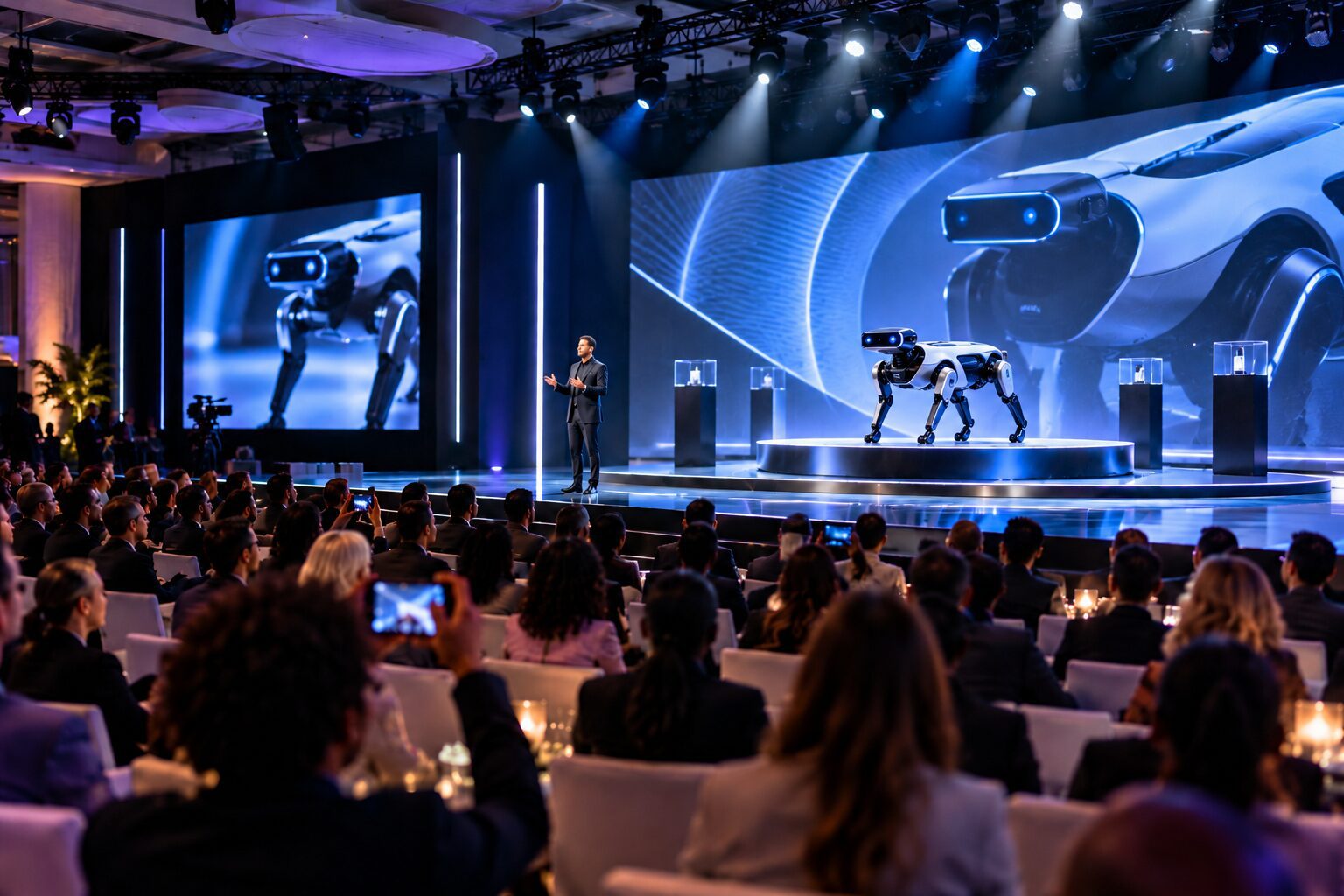
A successful product launch event is about more than unveiling something new. It’s about introducing a brand’s vision to the people who matter most and creating an experience that gives them a reason to pay attention.
With more than a decade of experience in event planning, production, and coordinating complex guest experiences, I’ve learned that the most memorable events aren’t necessarily the ones with the largest budgets or the most elaborate presentations. They’re the ones where every element serves a purpose, every interaction reinforces the message, and the experience feels intentional from beginning to end.
For companies preparing to introduce a new product, that distinction matters.
Months, sometimes years, of research, development, branding, and marketing can lead to a single defining moment: the launch. Yet in a marketplace overflowing with announcements, advertisements, and competing brands, simply introducing a product is no longer enough to guarantee attention.
The bigger question isn’t whether your product is ready for the market.
It’s whether your launch will give the market a reason to remember it.
The Attention Economy Has Changed Product Launches
Consumers and business buyers encounter an extraordinary amount of marketing content. New products appear across social media feeds, email campaigns, digital advertisements, and industry publications every day.
For brands, the challenge isn’t simply getting noticed. It’s making that attention meaningful.
A well-executed product launch event creates an opportunity to move beyond traditional advertising and establish a direct connection with an audience. Instead of simply telling people what a product does, brands can introduce the thinking, innovation, and identity behind it.
This is where experiential marketing becomes particularly valuable.
A product demonstration can explain a feature. Through an immersive brand experience, audiences can discover why that feature matters.
Research and analysis published by Harvard Business Review explore how marketing strategies influence customer engagement, brand perception, and business growth.
For marketing executives, this raises an important consideration: Is the launch experience communicating the product’s value, or is it simply competing for attention?
Because attention without understanding rarely creates the kind of lasting brand recognition companies are investing to achieve.
A Beautiful Event Doesn’t Guarantee a Memorable Brand
There’s no shortage of impressive corporate product launches.
Elaborate stages, dramatic lighting, custom installations, celebrity appearances, and carefully designed environments can transform an ordinary venue into an extraordinary production.
But production value and brand impact are not interchangeable.
Guests might remember the spectacular entrance, the entertainment, or the elaborate dinner while struggling to recall the product itself.
That’s a missed opportunity.
The most effective brand experiences connect the environment directly to the product. Every detail, from the atmosphere and presentation to hospitality and audience interactions, should reinforce the brand’s identity.
Consider a technology company introducing a product built around simplicity and accessibility. An unnecessarily complicated launch experience could contradict the very message the company wants consumers to embrace.
Similarly, a wellness brand promoting mindfulness and balance may struggle to communicate authenticity through an overwhelming, high-energy production.
The experience should never overshadow the product. It should make the product more compelling.
For companies investing in corporate product launch planning, that alignment can be just as important as the creative concept.
The Guest Experience Is Part of the Brand Experience
A product launch doesn’t begin when the presentation starts.
It begins with the first interaction a guest has with the event.
For a journalist, that might be the invitation or media correspondence. An investor may form an impression during the arrival experience, while an influencer or industry partner might remember their first opportunity to interact with the product.
Every interaction shapes how guests perceive the brand.
Even a visually impressive launch can lose its impact when guests encounter disorganized registration, confusing transitions, delayed presentations, or poorly managed VIP arrangements.
These details may appear operational, but their consequences extend beyond event logistics.
They influence perceptions of professionalism, credibility, and the organization’s attention to detail.
This is especially significant for product launches involving media representatives, corporate executives, investors, distributors, and influential industry stakeholders.
These audiences aren’t simply attending a celebration. They’re evaluating a product, a company, and potentially a future business relationship.
A seamless experience allows the brand’s message to remain the focus.
An inconsistent experience risks making the execution more memorable than the innovation.
Experiential Marketing Turns an Introduction Into a Conversation
Traditional advertising introduces products to an audience. Experiential marketing creates opportunities for audiences to interact with them.
That interaction can be particularly powerful during a product launch event, when first impressions are still forming.
Consider the difference between watching a presentation about a new audio product and experiencing its sound quality firsthand in an environment designed to demonstrate its capabilities.
The first communicates information.
The second gives the audience something to experience, evaluate, and potentially share.
This approach isn’t limited to technology.
Beauty brands can create immersive environments around new collections. Automotive manufacturers can develop experiences that communicate performance and innovation. Lifestyle brands can introduce products through carefully curated hospitality, cultural experiences, and interactive installations.
Industry publication Event Marketer regularly explores how brands use experiential marketing, live events, and creative activations to engage audiences beyond traditional advertising.
The significance of these experiences isn’t simply that they look impressive.
They give audiences a reason to engage with the product and the brand behind it.
And that’s the difference between hosting an event around a product and creating an experience that brings the product to life.
The Real Impact Begins After the Reveal
For many companies, the unveiling feels like the defining moment of a product launch.
The countdown ends. The product appears. The audience applauds. Cameras capture the moment.
But the commercial value of a launch isn’t determined by applause.
It’s determined by what happens afterward.
Do journalists have a compelling story to tell? Are potential buyers interested in learning more? Did industry partners gain confidence in the product? Are guests sharing meaningful impressions rather than simply posting photographs of the venue?
These are the conversations that can extend the influence of a product launch event beyond its scheduled program.
A successful launch may support media coverage, strengthen stakeholder relationships, generate qualified interest, and create content that continues reaching audiences long after the physical event concludes.
However, not every launch should follow identical objectives.
A consumer-facing beauty launch may prioritize creator engagement and brand awareness, while a business-to-business technology launch may focus on product demonstrations, distributor relationships, or sales opportunities.
The event’s impact must ultimately connect to the company’s broader business objectives.
A room filled with enthusiastic guests is encouraging.
A room filled with the right people who leave understanding the product’s value is considerably more meaningful.
Why Execution Matters as Much as Creativity
Creative concepts often receive the most attention during product launch discussions.
And understandably so.
Brands want original experiences that generate excitement and distinguish them from competitors.
But even the strongest creative vision depends on disciplined execution.
A product launch event may involve multiple production teams, technical suppliers, hospitality partners, transportation providers, security personnel, media representatives, and executive stakeholders.
Each team must manage its responsibilities, deadlines, and operational requirements while contributing to one cohesive experience.
When teams fail to coordinate these elements effectively, the consequences can extend far beyond a delayed presentation or inconvenient transition.
Operational failures can affect guest confidence, media opportunities, executive schedules, and the overall perception of the brand.
This is why experienced event production and logistical oversight play such an important role in complex brand experiences.
Guests should experience a polished, cohesive event without witnessing the operational demands behind it.
At Offsite Destinations, we approach corporate events with that understanding. Creative ideas establish the vision, but thoughtful coordination, vendor management, guest experience, and detailed execution are what allow that vision to become a successful live experience.
Your Product Deserves More Than a Moment
Launching a new product represents a significant milestone for any organization.
It’s the culmination of investment, innovation, collaboration, and the belief that something new deserves a place in the market.
That deserves more than an ordinary announcement.
But it also deserves more than an extravagant event without a clear purpose.
The most compelling product launches connect the company’s vision with the audience’s experience. They create space for discovery, conversation, and meaningful engagement while reinforcing the brand’s identity.
They make people understand not only what’s being introduced, but why it matters.
Because when the venue empties, the production equipment disappears, and the final guest departs, the most important part of the launch remains.
What will people remember about your brand?
At Offsite Destinations, we specialize in producing thoughtfully coordinated corporate experiences, including product launches, brand activations, executive gatherings, and high-impact business events.
Your product is the introduction. The experience is what makes it memorable.

View comments
+ Leave a comment