
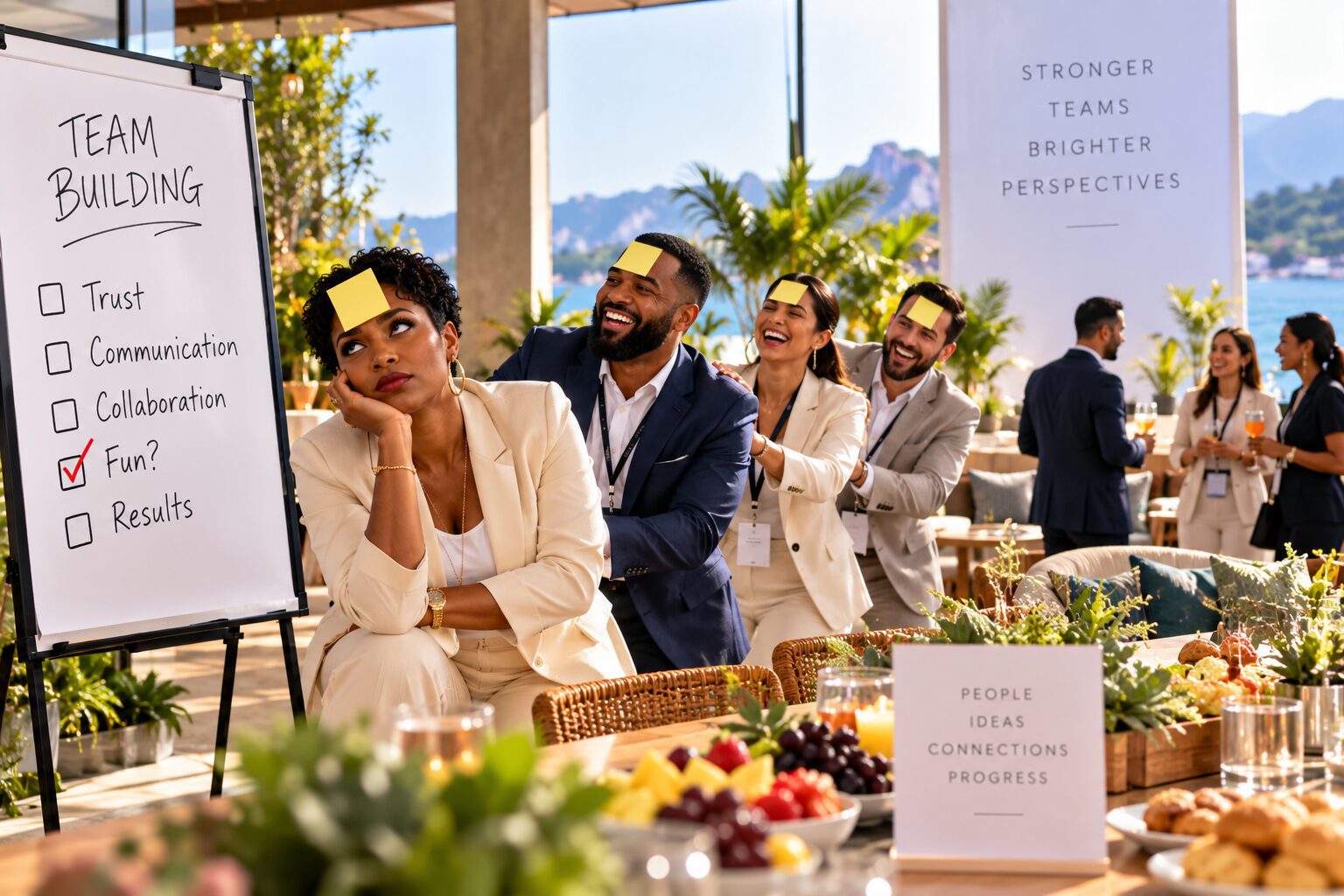
The words “mandatory team-building activity” can make even the most enthusiastic employees reconsider their afternoon plans.
After more than a decade of coordinating events, managing guest experiences, and bringing diverse groups of people together, I’ve learned that creating an enjoyable environment doesn’t automatically create meaningful connections. People can attend the same event, participate in the same activities, and leave without feeling any closer to one another.
That distinction matters in corporate environments, where companies invest time and resources into strengthening workplace relationships.
Corporate retreats, employee appreciation events, and team-building experiences often begin with good intentions. Leadership wants to improve morale, encourage collaboration, and create a stronger sense of community.
Yet employees don’t always share that enthusiasm.
Why employees hate team building often has less to do with the idea of spending time together and more to do with how those experiences make them feel.
The problem isn’t necessarily team building.
It’s the expectation that everyone should enjoy the same experience in the same way.
When Corporate Fun Becomes Another Work Assignment
Imagine receiving a company-wide invitation to an afternoon of mandatory team-building activities.
The invitation promises excitement, collaboration, and an opportunity to connect with colleagues outside the usual work environment.
For some employees, that sounds appealing.
Others immediately wonder whether they’ll have to participate in uncomfortable icebreakers, perform in front of coworkers, or spend several hours engaging in activities they wouldn’t voluntarily choose.
The event may offer a welcome break from routine, but mandatory participation can change how employees perceive the experience.
Instead of viewing the gathering as an opportunity to connect, they may see it as another professional obligation.
This creates an interesting contradiction.
Companies want employees to relax, but the expectation to participate can introduce pressure.
Organizations encourage authenticity while sometimes requiring employees to behave in ways that feel unnatural.
An article published by Harvard Business Review explores the dangers of mandatory workplace fun and how forced social activities can unintentionally deepen feelings of isolation.
For corporate leaders, this raises an important question.
Can an experience genuinely strengthen workplace relationships when employees feel obligated to enjoy it?
Employees Don’t All Connect the Same Way
One of the biggest challenges with traditional corporate team building is the assumption that everyone enjoys the same activities.
Some employees thrive in energetic group environments. They enjoy games, public participation, and opportunities to interact with unfamiliar colleagues.
Others prefer quieter conversations, smaller gatherings, or experiences that allow relationships to develop naturally.
Neither preference reflects a lack of commitment to the company.
People simply have different personalities, comfort levels, and social expectations.
A highly extroverted employee may enjoy an afternoon filled with competitive activities, while an introverted colleague might find the same experience exhausting.
Employees with disabilities or accessibility needs may also encounter barriers when activities don’t accommodate different abilities.
These differences matter because workplace connection shouldn’t depend on an individual’s willingness to participate in a particular type of entertainment.
Why employees hate team building sometimes comes down to a simple issue: the experience doesn’t reflect the people it’s supposed to bring together.
When organizations overlook those differences, even well-intentioned events can leave certain employees feeling excluded.
The Difference Between Participation and Connection
A room filled with employees laughing, competing, and participating in activities can create the appearance of successful team building.
But visible participation doesn’t necessarily indicate meaningful connection.
An employee might enjoy a game without developing greater trust in their coworkers.
Another may participate enthusiastically while continuing to feel disconnected from the organization.
This distinction matters because workplace relationships develop through more than shared entertainment.
Trust, communication, mutual respect, and professional support influence how employees experience their teams.
Research from Gallup highlights the relationship between workplace friendships, employee engagement, and important business outcomes.
The findings reinforce an important idea: meaningful relationships at work contribute to more than social enjoyment.
They can influence collaboration, commitment, and how employees support one another during challenging situations.
However, those relationships rarely emerge simply because an organization schedules a group activity.
Shared experiences can create opportunities for connection, but they cannot manufacture trust.
Why Employees Sometimes Resent Company Culture Initiatives
Corporate culture has become an important focus for organizations seeking to improve employee satisfaction and retention.
Companies introduce recognition programs, appreciation events, wellness initiatives, and team-building experiences to demonstrate their commitment to employees.
Yet these efforts can create frustration when the workplace experience doesn’t match the message.
Imagine an organization struggling with excessive workloads, limited communication, or declining employee morale.
Leadership announces an elaborate team-building event intended to strengthen company culture.
Employees may appreciate the gesture, but some could question why the organization is investing in entertainment while more immediate workplace concerns remain unresolved.
The event itself isn’t necessarily the problem.
The disconnect between employee needs and leadership priorities creates tension.
Corporate experiences can reinforce a healthy workplace culture, but they cannot replace fair treatment, effective communication, supportive management, or professional development.
Why employees hate team building may have very little to do with the activities themselves.
Sometimes, their reaction reflects larger frustrations with the organization.
An event can provide a temporary change of environment, but it cannot resolve every issue employees experience when they return to work.
The Problem With One-Size-Fits-All Corporate Experiences
Organizations often bring together employees from different departments, generations, professional backgrounds, and geographic locations.
These individuals may have little in common beyond their employer.
That diversity can strengthen a company, but it also creates different expectations surrounding corporate events.
A newly hired employee may welcome opportunities to meet colleagues.
An experienced executive might value informal conversations with leadership, while a remote employee could appreciate finally meeting coworkers face-to-face.
Others may prefer an experience that recognizes their contributions without requiring extensive social participation.
When companies treat every employee as though they have identical preferences, the experience can feel disconnected from the audience.
This becomes particularly noticeable during large corporate retreats and employee appreciation events.
A program filled with nonstop activities may appeal to some attendees while overwhelming others.
Similarly, a highly structured event can limit the spontaneous conversations that often make corporate gatherings enjoyable.
The most meaningful experiences recognize that people engage differently.
They create an atmosphere where employees can feel comfortable participating without believing they must perform enthusiasm.
Team Building Shouldn’t Feel Like a Performance Review
One reason employees may approach corporate team-building activities cautiously is the presence of workplace hierarchy.
Even outside the office, professional relationships still exist.
Supervisors remain supervisors. Executives continue to represent leadership, and employees may remain conscious of how colleagues perceive their behavior.
An activity that appears lighthearted to an organizer might feel uncomfortable to someone who worries about making mistakes in front of management.
Competitive games can create similar concerns.
While some employees enjoy friendly competition, others may feel that their participation reveals something about their professional abilities.
Public speaking exercises, physical challenges, and personal storytelling can introduce additional pressure.
The objective may be to encourage openness, but employees don’t necessarily feel comfortable becoming vulnerable in front of colleagues.
Why employees hate team building can stem from this uncomfortable overlap between professional expectations and personal boundaries.
An enjoyable experience should allow people to connect without making them feel as though someone is evaluating their personalities, confidence, or willingness to participate.
Corporate Retreats Offer More Than Traditional Team Building
Corporate retreats create opportunities that extend beyond games and structured activities.
They allow organizations to bring employees together in environments that differ from their everyday workplaces.
A change of setting can encourage informal conversations, provide space for reflection, and create opportunities for colleagues to interact outside their usual responsibilities.
For distributed teams, an in-person gathering may offer a rare opportunity to build relationships beyond video meetings and email exchanges.
Executive retreats can also create space for leadership conversations that don’t always happen during routine business operations.
However, the destination or venue alone doesn’t guarantee a meaningful experience.
A beautiful resort, impressive meeting space, or elaborate itinerary cannot compensate for a program that ignores the needs of its participants.
The value of a corporate retreat comes from the relationship between its purpose, atmosphere, and audience.
When organizations prioritize genuine engagement over constant activity, the experience can feel less like an obligation and more like a worthwhile investment in their people.
The Role of Thoughtful Corporate Event Execution
A corporate gathering involves more than selecting activities and bringing employees together.
The overall experience includes communication, hospitality, accessibility, scheduling, transportation, venue coordination, and the atmosphere employees encounter throughout the event.
These elements influence whether attendees feel comfortable, respected, and engaged.
An overly complicated schedule can create unnecessary pressure. Poor communication may leave employees uncertain about expectations, while logistical disruptions can distract from the intended experience.
Thoughtful execution helps reduce those distractions.
It allows participants to focus on the people around them rather than the operational details behind the event.
For organizations hosting corporate retreats, employee appreciation events, or leadership gatherings, professional coordination can help create a cohesive experience that reflects the company’s objectives.
At Offsite Destinations, we recognize that successful corporate experiences require an understanding of both business priorities and guest expectations.
Our approach emphasizes thoughtful coordination, professional execution, and environments that support meaningful interactions.
Because bringing people together is only the beginning.
The experience itself influences what they take away from the gathering.
Employees Want Connection, Not Forced Entertainment
Workplace relationships matter.
Employees benefit from colleagues they trust, leaders who communicate effectively, and environments where they feel respected.
Corporate gatherings can support those relationships by creating opportunities for shared experiences and conversations outside routine work responsibilities.
But connection cannot be forced through entertainment.
An employee who dislikes group games isn’t necessarily disengaged.
Someone who prefers a quiet conversation over a competitive activity may still value their colleagues and enjoy being part of the organization.
The challenge for companies is recognizing that employee engagement doesn’t always look like visible excitement.
Sometimes, meaningful connection happens during an informal conversation over dinner.
Other times, it emerges through a shared experience, an unexpected introduction, or a thoughtful exchange with leadership.
Why employees hate team building isn’t always the right question.
Perhaps the more important question is why organizations continue expecting every employee to experience connection in exactly the same way.
It’s Time to Rethink What Bringing Teams Together Means
Corporate team building doesn’t need to disappear.
Organizations still have valuable reasons to bring employees together, celebrate achievements, and create experiences beyond the traditional workplace.
However, the purpose should extend beyond filling an afternoon with activities.
A successful corporate experience recognizes employees as individuals with different personalities, expectations, and ways of connecting.
It supports the organization’s culture without attempting to manufacture enthusiasm.
Most importantly, it creates an environment where relationships have room to develop naturally.
At Offsite Destinations, we coordinate corporate retreats, executive offsites, employee experiences, and business gatherings designed around the people and objectives that matter most.
Because meaningful workplace connections don’t begin with mandatory fun.
They begin when people feel comfortable enough to connect.

View comments
+ Leave a comment